
Schaumburg Local
Flooring Replacement and Installation
From worn-out hardwood to fresh vinyl plank, we handle full flooring replacements across the northwest suburbs.
Free estimate
Tell us what you need
Three fields. It reaches a person here, not a call centre.
What Wood Flooring Replacement Actually Costs
Wood flooring replacement cost depends on a handful of factors: the size of the room, the condition of the subfloor underneath, and what material you're going in with. Hardwood, engineered wood, and luxury vinyl plank all land at different price points, and the prep work under your feet can double the job if the subfloor has water damage or severe unevenness. The Local Handyman LLC has been replacing and installing floors across Chicagoland's northwest suburbs since 2016. Call (773) 444-7153 and we'll walk you through what your specific floors will take.
The process matters as much as the material. Floors that aren't properly acclimated, installed over a compromised subfloor, or cut short on expansion gaps will cup, buckle, and squeak within a season or two. We don't skip the prep. After old flooring comes up, we inspect the subfloor, address any soft spots or height issues, and then install to manufacturer spec. Cost ranges vary significantly based on material and scope. A straightforward flooring repair on one room is a different job than a whole-home replacement with subfloor leveling on top. Every job is different. Contact The Local Handyman LLC for an accurate estimate.
Flooring Types
Materials We Install and Replace
Different floors need different approaches. Here's what we work with regularly.
Hardwood Flooring
Solid hardwood is the most demanding install. It has to acclimate to your home's humidity for at least 72 hours before a single plank goes down. Get that wrong and you'll see gaps in winter and buckling in summer. We follow the acclimation schedule, nail or glue to spec, and sand and finish on-site when the job calls for it.
Luxury Vinyl Plank
LVP has taken over the northwest suburbs for a reason. It's waterproof, it installs fast, and it holds up to pets and kids in a way hardwood doesn't. It's also forgiving on slightly imperfect subfloors, though we still check for high spots that'll telegraph through the planks over time.
Engineered Wood
Engineered wood gives you the look of real hardwood with better moisture stability. It's a strong choice for basements and kitchens where solid hardwood would move too much. We install click-lock and glue-down engineered systems depending on the substrate and what the manufacturer specifies.
Laminate
Laminate is the budget-friendly option and it's improved a lot in the last several years. The key is the underlayment. Skip it or use the wrong type and you'll hear every footstep in the house. We include proper underlayment and make sure the floating floor has enough expansion room at every wall.
Our Process
How a Flooring Replacement Actually Goes
- 01
Tear-Out and Subfloor Check
Old flooring comes up first. Then we look at what's underneath. A subfloor that's soft, uneven, or has moisture damage needs to be addressed before anything new goes down. Skipping this step is why floors fail early.
- 02
Prep and Layout
Planks acclimate in the space. We establish a straight reference line, plan the layout so cuts at the walls are symmetrical, and set up the expansion gap around the perimeter. This is where most DIY jobs go sideways.
- 03
Install, Trim, and Clean Up
Flooring goes in row by row with staggered seams. Transitions, thresholds, and base molding get reinstalled or replaced. We clean up before we leave. You walk in after and the only thing that changed is the floor looks better.
What Drives Cost
Factors That Change the Price of a Floor Job
- 01
Room Size and Layout
Larger rooms cost more. Rooms with lots of angles, closets, and doorways take longer to cut and fit. Open-plan spaces are the most efficient to install.
- 02
Subfloor Condition
A solid, level subfloor is a fast install. Soft spots, squeaks, height variations, or old adhesive from previous flooring all add time and materials to the job.
- 03
Material Choice
LVP on the low end, solid hardwood with site finishing on the high end. The gap between those two can be significant. We'll tell you honestly what fits your situation and your budget.
- 04
Demo and Disposal
Removing old carpet is quick. Pulling up glued-down tile or old hardwood takes longer. Disposal of the old material adds to the cost depending on volume.
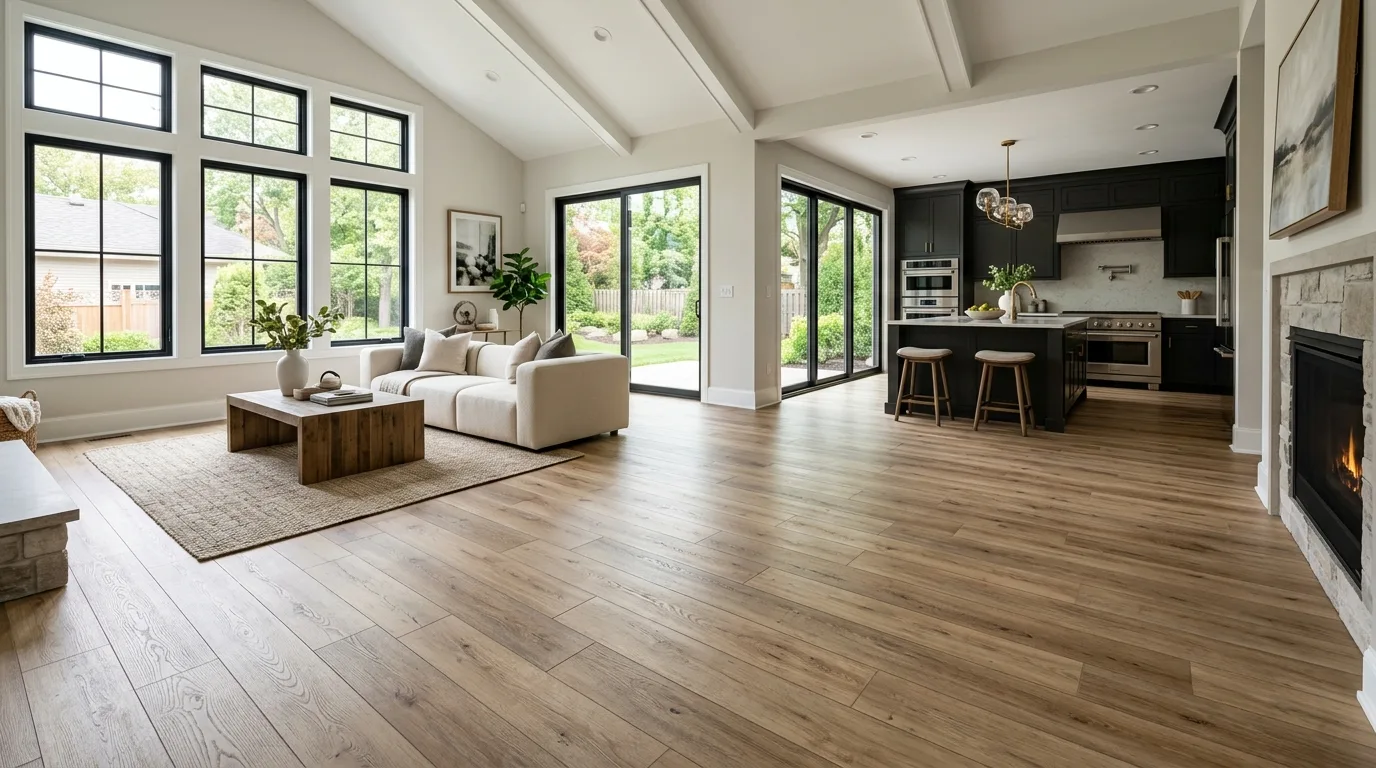
Flooring Work We've Done Across Chicagoland
Why Floors Fail and How We Prevent It
- 01
Wrong Acclimation
Wood-based flooring needs time to reach equilibrium with your home's humidity before it's nailed down. We don't rush this. Planks that go down too soon move after install and create gaps or buckling within a year.
- 02
Subfloor Problems Left In
Soft spots and high points don't disappear under new flooring. They telegraph through. We fix them first. That means the floor you walk on five years from now is the same floor you walked on the first week.
- 03
Missing Expansion Gaps
Every floating floor needs room to move with seasonal humidity changes. Floors installed tight to the walls with no expansion gap eventually buckle. We set the gap correctly at every wall and use the right transitions at doorways.
Flooring Replacement Questions
Can you put new flooring over existing flooring?
What's the most cost-effective flooring to replace with?
How long does a flooring replacement take?
Do you handle the old flooring removal and disposal?
How do I know if my subfloor needs repair before new flooring goes in?
Do you install flooring as part of a larger kitchen or bathroom renovation?
How long does flooring replacement take?
Do you handle old flooring removal and disposal?
How much does it cost to replace an entire floor?
Do you install flooring as part of a kitchen or bathroom remodel?
Ready to Replace Your Floors?
Call The Local Handyman LLC and tell us what you're working with.