
Schaumburg Local
Ceiling Fan Installation by The Local Handyman
From a simple swap to a new ceiling install, we handle it right the first time.
Free estimate
Tell us what you need
Three fields. It reaches a person here, not a call centre.
Fan Installation Done by Experienced Hands
Fan installation sounds simple until you're up on a ladder with mismatched wires, a ceiling box that wasn't designed for a fan, or a bathroom exhaust that keeps tripping a breaker. The Local Handyman LLC has been handling fan installation jobs across the northwest Chicago suburbs since 2016, and we know where these installs go sideways. Call us at (773) 444-7153 and we'll get it scheduled.
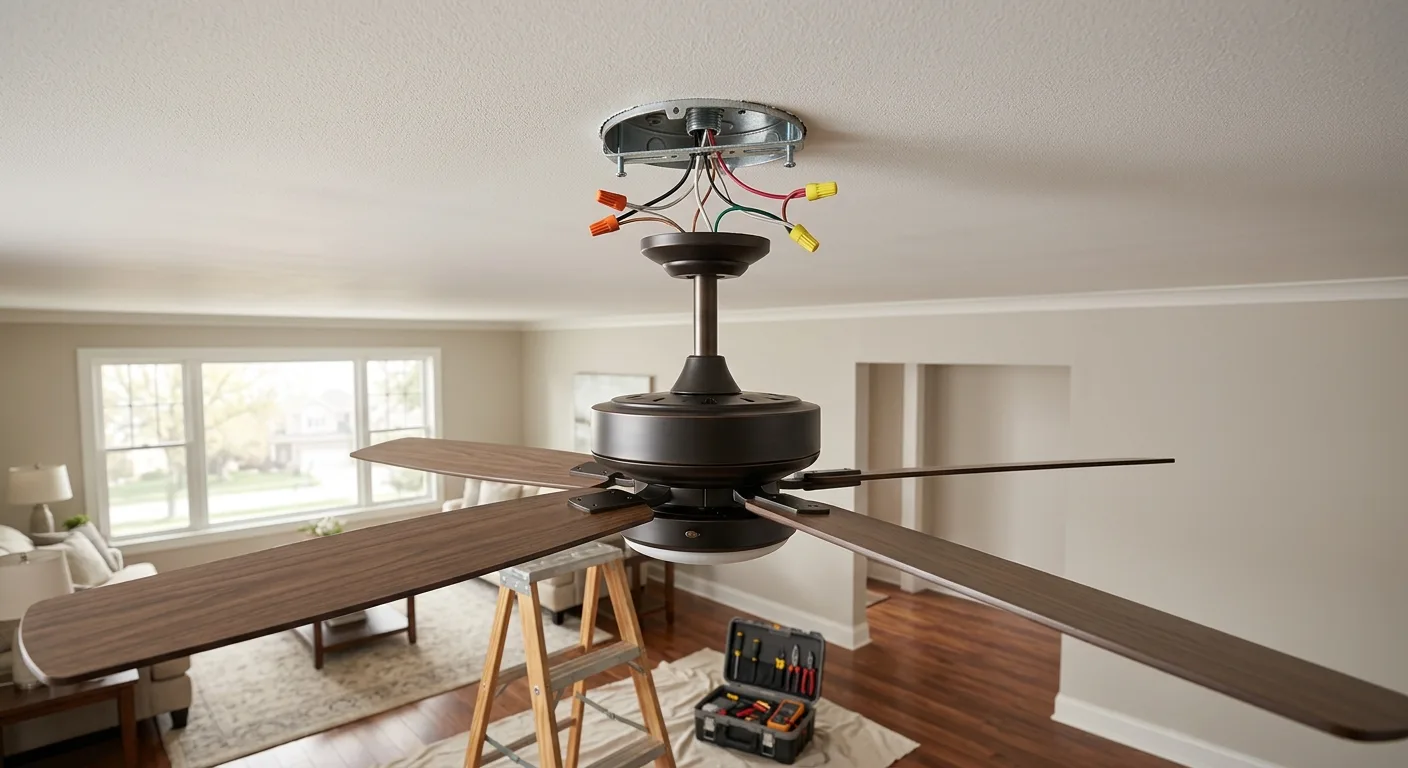
Most ceiling fan installs run smoothly when the wiring is already in place and the ceiling box is fan-rated. What drives the job up in complexity is a box that needs replacing, vaulted or cathedral ceilings that need a longer downrod, old aluminum wiring, or a spot with no existing fixture at all. Bathroom exhaust fans add their own wrinkle: duct routing, soffit access, and making sure the fan actually vents outside instead of into the attic. Every job is different, contact The Local Handyman LLC for an accurate estimate.
What We Handle
Fan installs we take on every week
Ceiling fans, bath exhaust fans, and combination light-fan units throughout the northwest suburbs.
Ceiling Fan Replacement
Swapping an old fan for a new one is the most common call we get. We pull the old unit, check the box rating, sort out any wiring quirks, and mount the new fan. If the box isn't fan-rated, we replace it before anything goes up.
New Ceiling Fan in an Existing Light Location
Lots of rooms have a light fixture where a fan should be. The ceiling box almost always needs to be swapped for a fan-rated one. That's a step a lot of DIY installs skip, and it's the reason fans wobble or pull loose over time.
Bathroom Exhaust Fan Installation
Bath fan installations take more planning than people expect. The duct has to run to an exterior vent, not just into the attic. We handle the full install: fan unit, duct routing, exterior cap, and wiring.
Combination Fan and Light Units
Combination units are trickier to wire correctly than either component alone. We've installed enough of them to know where the common mistakes happen. You get a unit that works as it should from day one.
Fan Repair
Wobble, noise, a light that flickers, a motor that hums but doesn't spin. A lot of fan problems are fixable without a full replacement. We'll tell you honestly whether it's worth repairing or time to replace.
Our Process
How a fan installation actually goes
- 01
Check the box and wiring first
Before anything gets mounted, we confirm the ceiling box is fan-rated and the wiring supports the load. This is the step that prevents wobble, pull-loose, and tripped breakers down the road.
- 02
Mount, wire, and balance
We assemble the fan per manufacturer specs, make clean wiring connections, and check blade balance before we're done. A fan that vibrates on day one was installed incorrectly.
- 03
Test everything before we leave
All speeds, the light kit, the reverse function, the remote if it has one. We don't call a job done until you've seen it run through every function.
Good to Know
What to expect on a typical fan job
- 01
A fan-rated ceiling box is non-negotiable
Standard light-fixture boxes aren't built to handle the dynamic load of a spinning fan. If yours isn't rated, we swap it. No exceptions.
- 02
Vaulted ceilings need a longer downrod
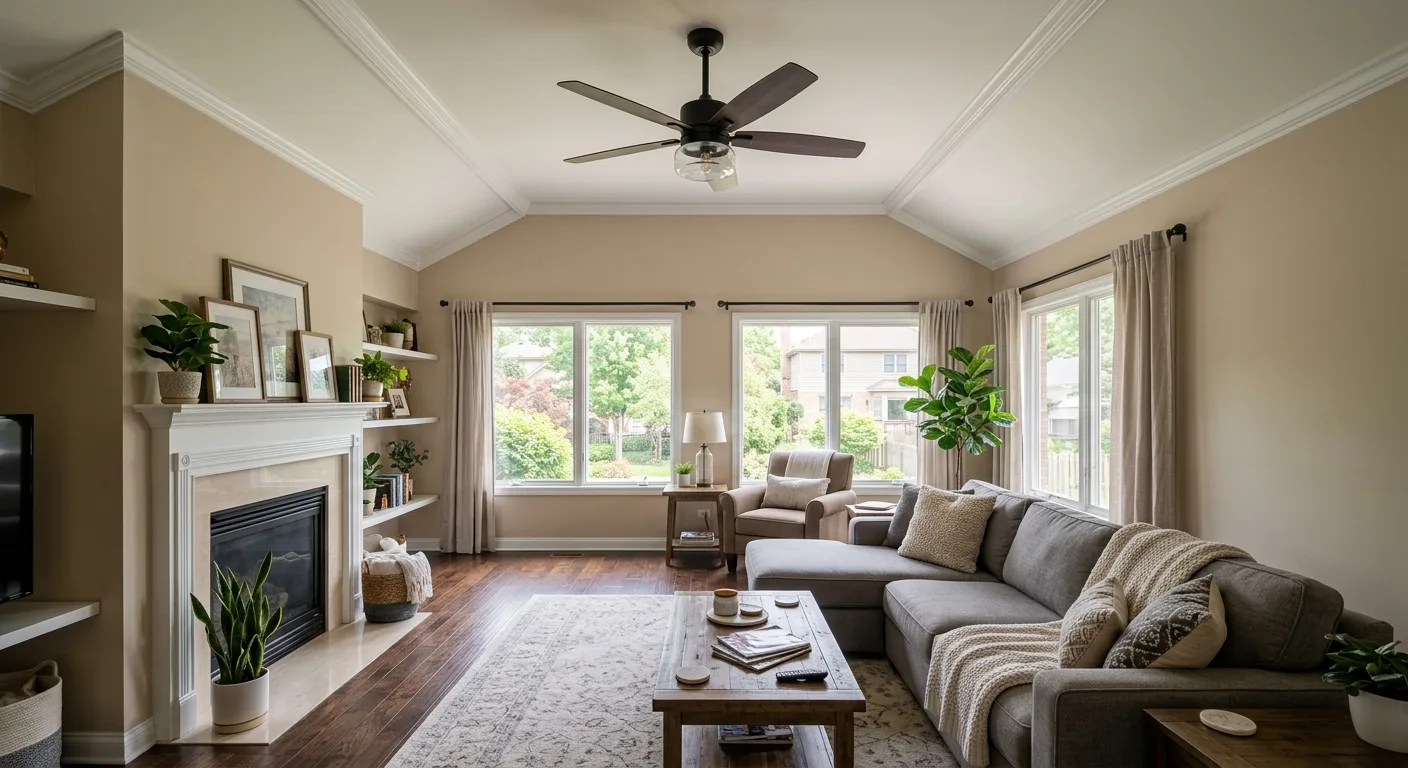
The blade tips need at least 7 feet of clearance from the floor. High or angled ceilings usually mean a longer downrod, and sometimes an angled mount. It's easy to get wrong if you're guessing.
- 03
Bathroom fans must vent outside
An exhaust fan ducted into the attic is a moisture problem waiting to happen. We route the duct to a proper exterior vent every single time.
- 04
Smart fans and remote kits add wiring steps
Wi-Fi fans and remote-control units often require a neutral wire at the switch. Older homes around the northwest suburbs frequently don't have one. We check before we start.
Part of a broader handyman services crew
Fan Installation: the short version
Here's what you're actually dealing with when you schedule a fan install.
- Serving northwest Chicago suburbs since 2016
- Nearly a decade of installs across residential homes in the area.
- Fan-rated box confirmed before mounting
- We check and replace the ceiling box if needed, no shortcuts.
- Bathroom fans ducted to the exterior
- Attic venting is wrong. We run it outside, every time.
- 5 stars across 3 Google reviews
- Small number, honest reviews. See them on our Google listing.
Fan Installation Questions
What does a handyman charge to install a ceiling fan?
How do I know if my ceiling box needs to be replaced before installing a fan?
Can a ceiling fan be installed where there's no existing light fixture?
What's the right downrod length for a high ceiling?
Why is my bathroom exhaust fan loud but not actually removing humidity?
Do older northwest-suburbs homes have the wiring needed for a ceiling fan?
What's the right downrod length for a high or vaulted ceiling?
Why is my bathroom exhaust fan loud but not removing humidity?
Do older homes in the northwest suburbs have the wiring needed for a modern ceiling fan?
Ready to get a fan installed?
Call The Local Handyman LLC at (773) 444-7153 to schedule. Mon-Fri 8am-5pm, Sat 10am-5pm.