
Schaumburg Local
Trim Work Installation and Repair
Baseboards, crown molding, door casings, and wall trim finished clean the first time.
Free estimate
Tell us what you need
Three fields. It reaches a person here, not a call centre.
What trim work actually covers
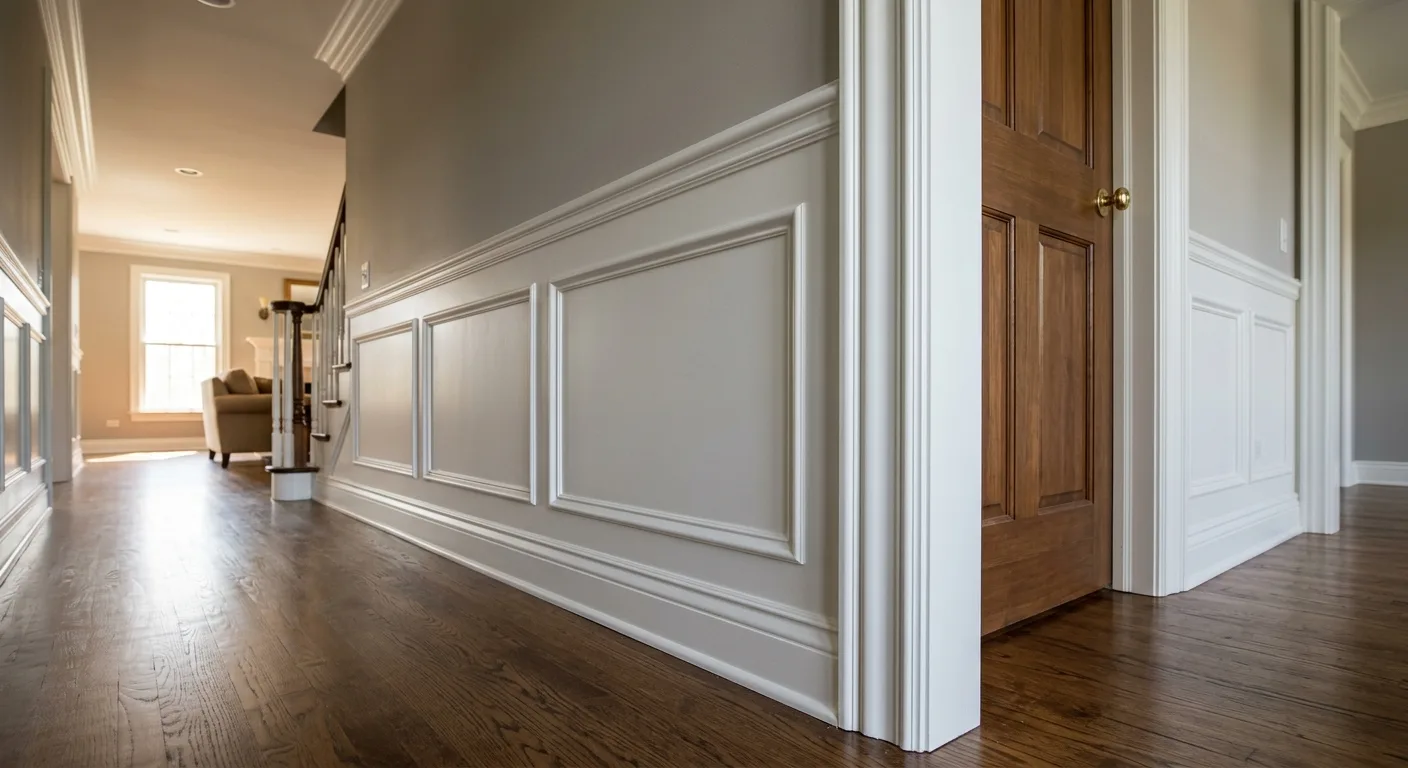
Trim work is the finish carpentry that frames every room in your house: baseboards along the floor, casing around doors and windows, crown molding where walls meet ceilings, chair rails, wainscoting, and wall panel trim. It's the last thing installed and the first thing people notice. Bad cuts, gaps at the corners, or caulk-filled miter joints that open up after a season tell the whole story of how a job was done. The crew at The Local Handyman LLC has been fitting and finishing trim across the northwest suburbs since 2016. If your trim needs replacing, your baseboards need to be re-run after a flooring installation, or you want crown molding added to a room that's never had it, call (773) 444-7153.
Cost on a trim job depends on the linear footage, the profile complexity, and whether you're working with paint-grade material or stain-grade wood that requires more careful handling. A single room of baseboard and door casing is a straightforward half-day job. Full crown molding on vaulted ceilings or custom built-in millwork is a different scope entirely. Material choice matters too: a basic colonial baseboard costs a fraction of what a routed hardwood profile runs. Every job is different, contact The Local Handyman LLC for an accurate estimate.
Types of trim work we install
Baseboards
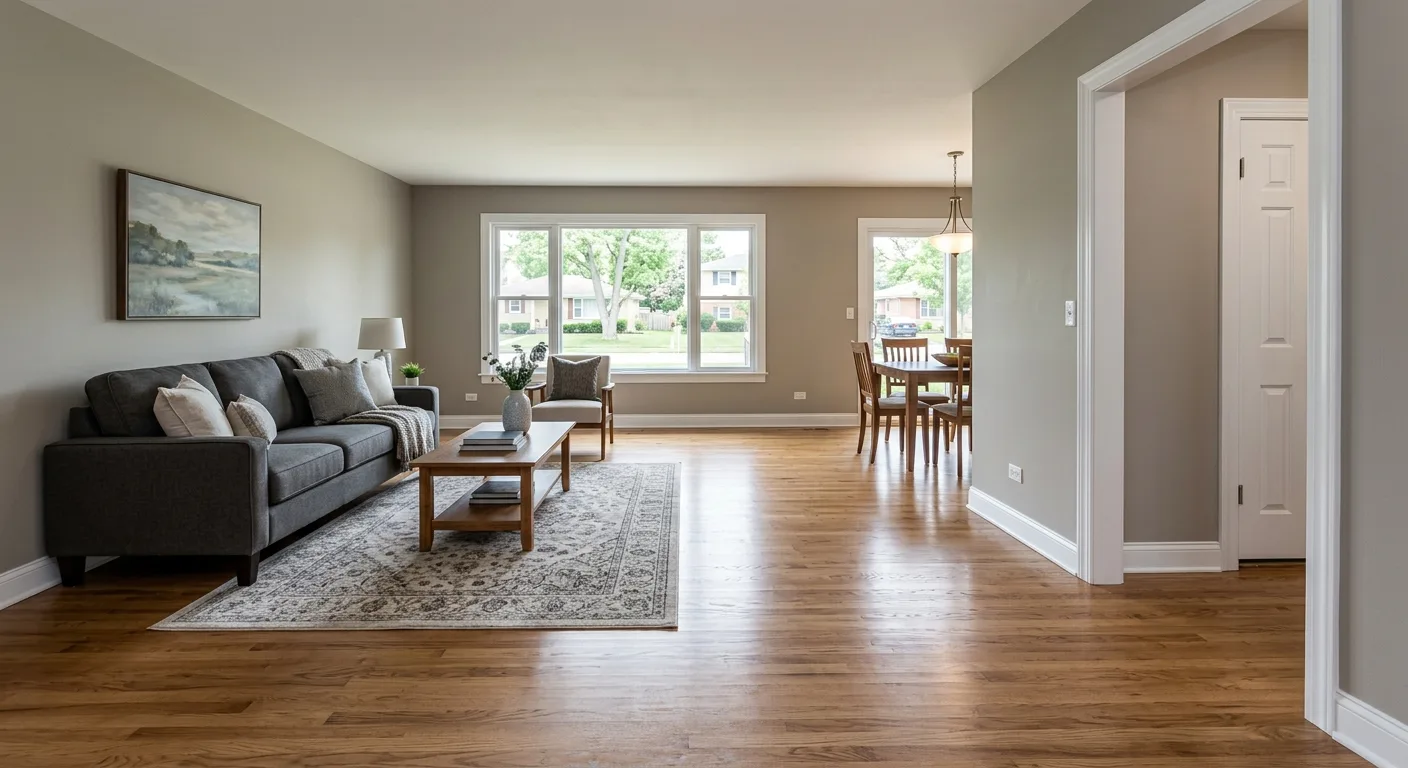
The most-replaced trim in any home. We run new baseboards after flooring goes in, match existing profiles in older homes, and cope inside corners so gaps don't open when the wood moves with the seasons.
Crown Molding
Crown is unforgiving. The angles compound, the walls aren't always plumb, and a bad splice in the middle of a run is visible from the doorway. We cut it right, fill the gaps, and leave a line you can actually hang a picture beside.
Door and Window Casing
Casing is what you see every time you walk through a doorway. We replace damaged casing, re-case doors that were never trimmed properly, and match the profile to what's already in the house so it doesn't look patched.
Chair Rail and Wainscoting
Chair rail, board-and-batten, and raised-panel wainscoting are all trim jobs. We handle layout, leveling, and installation so the finished wall looks intentional, not improvised.
Wall Panel Trim
Shiplap-style trim, picture frame molding, and decorative wall panels are popular additions in living rooms and bedrooms right now. We install them flat, level, and ready to paint.
Stair Trim and Railings
Newel posts, handrails, and baluster trim around a staircase take patience and a steady hand. We've done it. If your stair trim is loose, rotted, or just outdated, it's fixable.
How We Work
Our trim installation process
- 01
Measure and plan the layout
We walk the space, check walls for plumb and level, and decide where to place seams so they land in low-visibility spots. Skipping this step is why trim looks wrong even when it's technically installed.
- 02
Cut, fit, and nail
Every miter and cope is cut to fit the actual angle in your room, not the theoretical 45 degrees. We nail into studs or blocking, not just drywall, so the trim stays put.
- 03
Fill, sand, and finish
Nail holes get filled. Gaps at corners get caulked before paint, not after. We leave the trim ready for a finish coat, clean, smooth, and tight against the wall.
Trim that holds up over time
Scope Guide
When to repair versus replace your trim
- 01
Repair: surface damage and nail pops
If trim is structurally sound but has dings, nail holes, or paint buildup from years of repainting, a fill-and-sand is usually all it needs. No reason to rip it out.
- 02
Replace: water damage or rot
Baseboard and casing near exterior doors and windows can rot if water gets behind them. Once it's soft, it's not worth patching. We pull it, check the wall behind it, and run new material.
- 03
Replace: after flooring is swapped out
New flooring almost always means the old baseboards need to come off and go back. Sometimes they survive the process. Often they don't. We factor that into the job so you're not surprised.
- 04
Add new: updating a room's look
Rooms without crown molding, wainscoting, or any trim at all look unfinished. Adding trim is one of the higher-return improvements you can make before selling or just for your own satisfaction. It's also one of the cleaner jobs we do. Good custom carpentry makes a house feel built, not assembled.
Trim work across the northwest suburbs
We run trim jobs across the northwest Chicago suburbs. Single rooms, full houses, new construction finish-out, and renovation work where the original trim was never right.
- Hoffman Estates
- Palatine
- Arlington Heights
- Rolling Meadows
- Elk Grove Village
- Roselle
- Streamwood
- Hanover Park
- Carol Stream
- Bartlett
- Bloomingdale
- Des Plaines
- Mount Prospect
- Buffalo Grove
- Wheeling
- Addison
- Wood Dale
- Itasca
- Park Ridge
Ready to get the trim right?
Call The Local Handyman LLC to schedule your trim work.